Lucretius and early modernity
Interpretations of Lucretius’ work during the fraught centuries of early modernity were heavily influenced religious thought — and occasionally censorship. Individuals working with the text faced the tension of reconciling these religious ideas while respecting the integrity of the original text. This is the reason many editions have a ‘warning’ from the translator — and why it is important to pay attention to the style and design of typesetting. This section contains three copies of Lucretius, ranging from 1520-1772, with examples of these warnings or other design conventions attested elsewhere in religious texts.
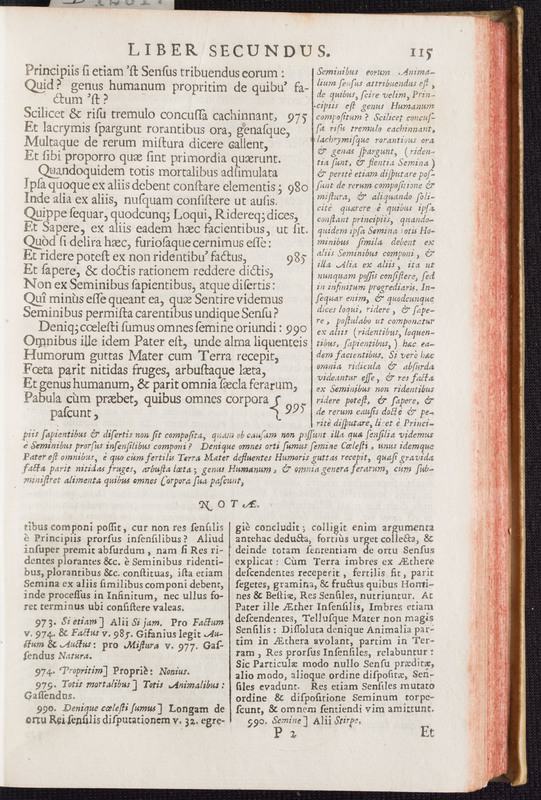
Titi Lucretii Cari De rerum natura libri sex (B 12317). This 1695 Latin volume — the earliest featuring the work of Thomas Creech in this selection, and the only one produced during his lifetime — is visually intriguing because of its printing format. Notes from Creech are included at the bottom of the pages as footnotes, with his linguistic interpretations forming a border surrounding the original text. This is similar to the format of authorised commentaries on religious works which prevailed during the manuscript period and the early centuries of print.
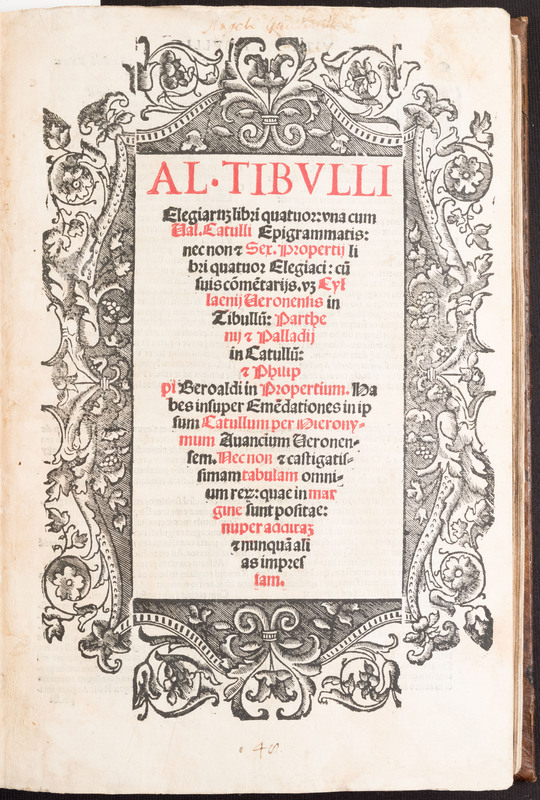
Al. Tibulli Elegiaru[m] libri quatuor… (D 2187). This 1520 Latin volume from Venice, is the oldest example of engagement with Lucretius within this collection, and the only one to be printed in Gothic blackletter. The detailed commentary wrapping around the printed text of Lucretius’ poem, by the scholar Hieronymous Avantius, echoes a religious decretal or authorised commentary. The typography is noteworthy — selecting Gothic blackletter for a humanist text, rather than the more predictable humanist types in wide circulation by the 1520s, is an interesting and somewhat anachronistic choice. This work incorporates writings by several other Roman poets in addition to those of Lucretius.
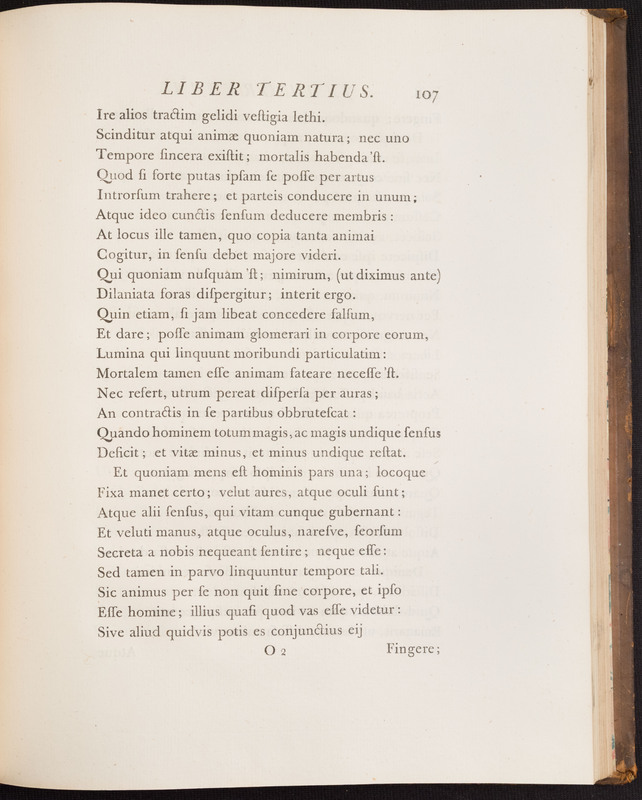
Titi Lvcretii Cari de Rervm Natvra Libri Sex (D 1108). This 1772 Latin volume from Birmingham was printed as a readerly copy of the entire poem. The printing is neat, clear, large in type, and lacks any of the notes or annotations so prevalent in other volumes of this collection. By forgoing these conventions, the reader is left alone with Lucretius’ text, to experience it without guidance and adornment — one is tempted to recognize an austere Protestant sensibility at play.