Visualizing Lucretius
Lucretius’ text is both complex and replete with visual imagery, and illustrations played an integral role in many reproductions of his work. These images act as an aid to readers in understanding the dense language of the original or emphasizing subtleties that may have been lost through the act of translation. These featured images were produced using the copperplate engraving method, a specialized process of intaglio printmaking that allowed for particularly intricate detail. Several of the Lucretius texts utilize what seem to be standardized images that correspond to the contents of each book in De rerum natura, while other editions have created original images which perhaps reflects the time or culture of the interpreter.
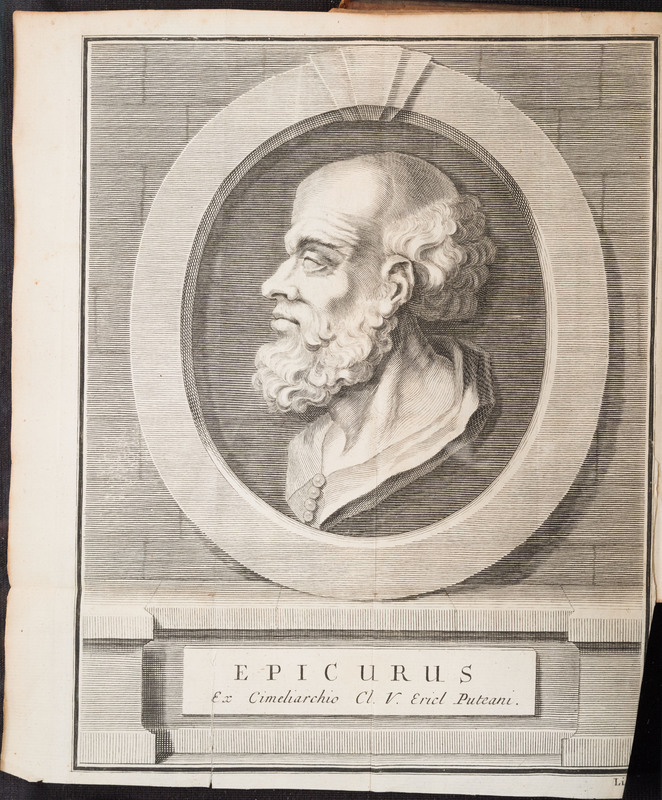
T. Lucretius Carus of the Nature of Things, in Six Books. Illustrated With Proper and Useful Notes. Adorned with Copper-Plates, Curiously Engraved by Guernier and others (B 0258). This 1743 volume spans books four to six of Lucretius’ of the Nature of Things, and was illustrated by the Franco-English engraver Louis Guernier (among others) with large, detailed copper plate engravings. The plates are fold-outs — each is larger than the page size of the book itself. These images convey information and themes pertinent to the contents of each book. Book four begins with a portrait of Epicurus, the founding figure of Lucretius’ Epicurean school of philosophy.
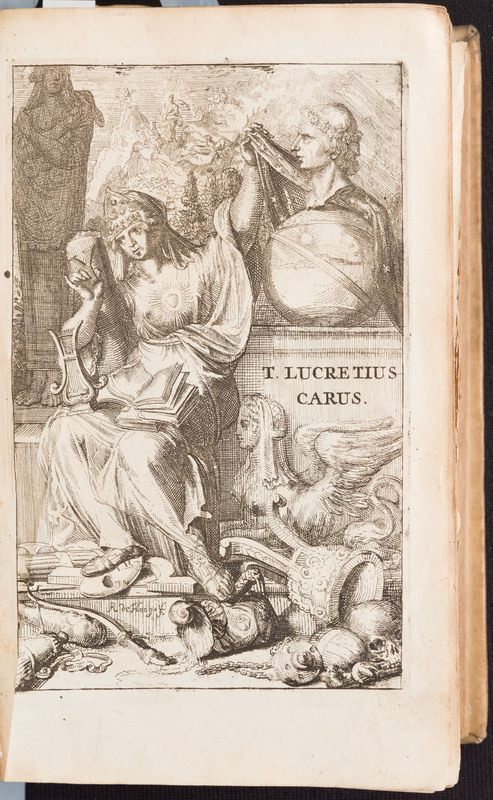
De Werken Van T. Lucretius Carus Van Het Heelal (B 9580). This 1701 volume from Amsterdam was translated from Latin into Dutch by Jan de Witt and illustrated with seven copper plates engravings by Romeyn de Hooghe. Notably, the illustrations are accompanied by captions that point to their symbolism and important details; each book is preceded by an illustration that reflects its contents, acting as a visual aid to the reader. The very first illustration depicts the consort of Lucretius and other symbolic imagery related to the philosopher Lucretius, rather than the text itself.. Furthermore, the illustrator has incorporated Dutch-specific imagery, such as the eagle of convention, which would signal a literary hero to the Dutch audience.
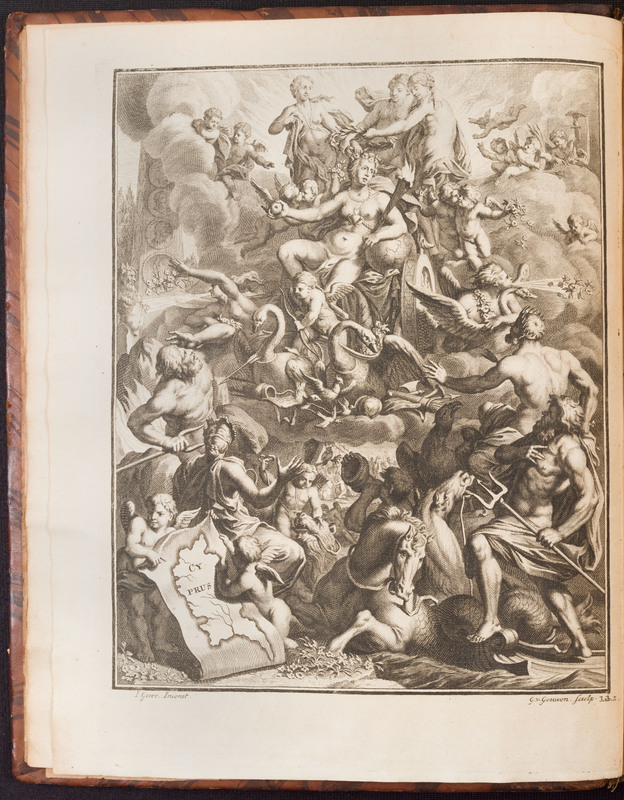
Titi Lucreti Cari De Rerum Natura Libri Sex (D 1439). This 1712 Latin volume from London contains all six books of Lucretius’ philosophy in the original Latin. What makes this volume interesting is the three images that begin each book as well as the smaller printed line numbers beside the heading images that correlate the engravings with specific verses within the relevant book. The full-page images from book four onwards correspond directly to those included in B 0258, discussed to the left.